Billions of dollars have already been spent on fighting the Avian Flu pandemic, and the chances of it spreading are still quite high. However we will never have enough vaccines or medicines to fight off this disease if it indeed spreads. The two solutions that Caplan and McGee suggest are quarantine and rationing. For this to happen the public needs to trust their government officials with their health and life—which, right now, they do not.
The authors explain that if military men in gas masks invade people’s homes and communities the reaction will be panic and mass hysteria. In order for such a government response to run smoothly McGee and Caplan suggest educational classes and town meetings where officials explain what will need to be done if Avian Flu spreads widely to humans.
Read more: Arthur Caplan and Glenn McGee on Bioethics at timesunion.com
Friday, March 10, 2006


Thursday, March 09, 2006
Fatherhood Suit: Roe vs Wade for Men?
Contending that women have more options than they do in the event of an unintended pregnancy, men's rights activists are mounting a long shot legal campaign aimed at giving them the chance to opt out of financial responsibility for raising a child.
The National Center for Men has prepared a lawsuit -- nicknamed Roe v. Wade for Men -- to be filed Thursday in U.S. District Court in Michigan on behalf of a 25-year-old computer programmer ordered to pay child support for his ex-girlfriend's daughter.
The suit addresses the issue of male reproductive rights, contending that lack of such rights violates the U.S. Constitution's equal protection clause.
The gist of the argument: If a pregnant woman can choose among abortion, adoption or raising a child, a man involved in an unintended pregnancy should have the choice of declining the financial responsibilities of fatherhood. The activists involved hope to spark discussion even if they lose.
Hands Off Our Ovaries and International Women's Day
March 8th, International Women's Day, a coalition of pro-choice and pro-life women, concerned at the growing exploitation of women in biotechnology will launch a new campaign against the harvesting and marketing of human eggs. The campaign. "Hands off our ovaries!" will highlight the short and long-term risks involved in egg harvesting and its significance for the health and dignity of women, an issue that has been addressed on this blog before and is a concern of the Women's Bioethics Project.
Concerned feminist representatives have joined together on this common ground, outraged by the casual attitude of the biotech industry towards the female body. Like-minded leaders and groups from around the world are invited to join a list which already includes representation from the USA Europe and Asia.
(hat tip to Jennifer Lahl)
No Gnome Liberation for Women

(Photo: Duncan Andrew, The Witness)
I have a question I’d like answered: Do you get female gnomes? There seems to be some confusion around this point, as the Cambridge Advanced Learner’s English Dictionary defines a gnome as a very small old man with a long beard and pointed hat. But other accounts and many garden gnome displays lend testimony to the fact that there are indeed both male and female gnomes.
Which brings me to the issue I want to raise, my point(ed hat) of contention, as it were. Having been alerted to the issue of garden gnome liberation by a cutting-edge journalistic piece appearing in our local newspaper this week, I did some investigation into the phenomenon. And what I found was alarmingly reflective of the discrimination perpetuated against women in (real) society.
As reported in The Witness this week, “garden gnome liberation is a worldwide phenomenon…a political movement dedicated to liberating gnomes from the gardens in which they are shackled…removing gnomes from gardens and either taking them out to the woods to release them or smashing them to set their spirits free.” A (g)noble cause, and one taken up in earnest by liberation movements around the world – like the Free the Gnomes group in the United States.
But if one looks more closely at the reports and photographic testimonies of the struggle for gnome civil liberties and rescue attempts around the world, one notices that the gnomes that are liberated all share one common characteristic: they are all male gnomes. What about the female gnomes? Could these liberation fronts be operating on the assumption that women are more contented to stay ‘shackled’ in floral domesticity, while men have the biological need and moral right to be set free, to run wild?
Wednesday, March 08, 2006
Caffeine and the Heart: Mixed Messages for Java Lovers
For someone whom coffee is a transcendental experience, this recent report is provocative:
heart attacks might be a risk for coffee drinkers with a common genetic trait that makes caffeine linger in their bodies. In a study published in the Journal of the American Medical Association, researchers found that individuals with a certain genetic profile that were "slow metabolizers" of caffeine -- slow-metabolizers, those who drank two or more cups of coffee daily were at least 36 percent more likely to have a nonfatal heart attack than those who drank little or no coffee.
How do you know if you're a slow metabolizer or fast metabolizer? Currently, there's no easy way to know if you're a fast or slow caffeine metabolizer. Staying awake all night if you drink coffee in the afternoon doesn't mean you're a slow metabolizer -- there is a genetic test that could answer the question is used in research, but is not commercially available at this time.
So, in the meanwhile, I'll guess I'll take my chances and enjoy my morning java ritual.
AMA Warns Girls Not to Go Wild
The American Medical Association is warning girls not to go wild during spring break. All but confirming what goes on in those "Girls Gone Wild" videos, 83 percent of college women and graduates surveyed by the AMA said spring break involves heavier-than-usual drinking, and 74 percent said the break results in increased sexual activity.
The AMA is trying to call attention to underage drinking among women because their bodies process alcohol differently and put them at greater risk for health problems -- Sizable numbers reported getting sick from drinking, and blacking out and engaging in unprotected sex or sex with more than one partner, activities that increase their risks for sexually transmitted diseases and unwanted pregnancies. The AMA said the findings highlight the need for alternative spring break activities.
Tuesday, March 07, 2006
British Woman Loses Frozen Embryo Battle
In a move similar to the Tennessee Supreme Court in the Davis case , the European Court of Human Rights has ruled that a British woman has no right to use frozen embryos to have a baby without the consent of the man who provided the sperm.
Evolving Notions of Personhood and Humanity
Nicholas Wade of the NY Times reports that researchers have detected some 700 regions of the human genome where genes appear to have been reshaped by natural selection, a principal force of evolution, within the last 5,000 to 15,000 years, providing the strongest evidence yet that humans are still evolving.
Traditional notions of personhood usually require humanity, but if we're still evolving then perhaps we should be considering evolving notions of personhood. Which brings us to another interesting question: should be trying to control our evolution (and, in fact, haven't we already have by so many improvements in medical technology and health care, at least in this country) or should we be letting nature takes its course?
A Day of Mourning: Dana Reeve dies at age 45

Dana Reeve, best known for her tireless efforts in supporting her late husband, Christopher Reeve, and their support of stem cell research to find a cure for paralysis, died yesterday of lung cancer.
She served as chairwoman of the Christopher Reeve Foundation and founded the Christopher and Dana Reeve Paralysis Resource Center.
Kathy Lewis, president and CEO of the foundation, said "Dana will always be remembered for her passion, strength and ceaseless courage that became her hallmark... Along with her husband, Christopher, she faced adversity with grace and determination, bringing hope to millions around the world."
She is survived by her father, Dr. Charles Morosini; sisters Deborah Morosini and Adrienne Morosini Heilman; two stepchildren, Matthew and Alexandra; and her son.
Monday, March 06, 2006
Board Member Hilde Lindemann On the South Dakota Ban
As we posted before,
Way to go, Hilde!
Is Drug Data Delayed, Drug Data Denied?
An annual report by the US Food and Drug Administration (FDA) admits that about two-thirds of the post-marketing drug studies it had mandated have never been finished. According to the Times, one such study was mandated in 1955.
US Representative Maurice D. Hinchey (Democrat- New York), "said while the agency insisted that it demanded that drug makers prove their medication safe, those demands 'continue to be blatantly ignored by the pharmaceutical industry.'"
In reply, Dr John Jenkins, director of the FDA Office of New Drugs, "emphasized that only 5 percent of promised drug trials were officially considered 'delayed.' In many cases, trials have been pending for more than a decdade but are not considered delayed because the agency never insisted on a specific timeline for them."
Fellow blogger Roy Poses has a good comment on this story:
I agree that potentially beneficial drugs should be put on the market as soon as possible with the least red-tape. Randomized controlled trials that have adequate statistical power to determine if a drug has benefits when compared to a placebo may not have enough power to determine all its important adverse effects. Thus it may make sense, when a drug offers important benefits beyond any treatment currently available, to allow it on the market without complete safety information, and then to require post-marketing studies, with more statistical power (but perhaps also with more methodologic biases) to assess its adverse effects. But patients and physicians need to know about the all important possible hazards of potentially beneficial medicines to make optimal decisions about whether to use them. So it is crucial that these post-marketing studies get done as quickly as possible.
I don't understand why the FDA has been mandating these studies, but not mandating any deadlines for their completion. Patients and physicians are ill-served by delays (whether officialy defined or not) in accomplishing these studies.
If pharmaceutical companies really want to increase their trustworthiness to patients and physicians, they ought to consider completing all pending post-marketing studies expeditiously. And in my humble opinion, the FDA needs to hold pharmaceutical companies accountable for their failure to complete such studies in reasonable amounts of time.
Parental Notification laws have little impact
Laws that require minors to notify their parents or get permission to have an abortion do not appear to have produced the sharp drop in teenage abortion rates that some advocates hoped for, an analysis by The New York Times shows.
Artificial Blood (Polyheme) Trials : King and Kipnis
Ethicists Nancy M. P. King, Ken Kipnis, and Robert Nelson were kind enough to give us permission to re-print their letter originally posted on the Medical College of Wisconsin listserve:
Date: 06-14-04 22:37
We - Nancy M.P. King and Ken Kipnis - have been doing research on the ethics of waived-consent clinical studies now permitted under 21 CFR Part 50. Such a study is underway: a well-publicized multi-center trial, sponsored by Northfield Laboratories and testing a hemoglobin-based oxygen carrier (PolyHeme) on trauma victims. One of us - NK - had noticed a possibly serious problem that seemed to have been missed, and Robert Orr, a physician evaluating the PolyHeme protocol at the University of Vermont, contacted KK about the same issue. This posting is a request for comments and information that might throw light on the concerns we set out below.
The Northfield protocol provides that trial subjects - trauma patients in hemorrhagic shock who are being treated by EMTs - randomly receive either saline solution or PolyHeme. Enrollment occurs in the field under the waived-consent exception, before arrival at the emergency department. The research subject/trauma patient is likely to be in a medically exigent circumstance and incapable of consent, either because of the injuries or because of the gravity of the situation and the complexity of the consent process. Apart from slowing blood loss and replacing fluids, hemorrhagic shock is not satisfactorily treatable in the field.
Once at the hospital, efforts are to be made to secure consent for continued participation either from the patient/subject or a legally authorized representative. However if formal withdrawal from the study does not occur, participation continues by default during a 12-hour period in the hospital. Patients/subjects in the control group receive standard treatment: saline and blood as needed. However patients/subjects in the experimental group continue to receive PolyHeme instead of blood for oxygen delivery: up to six units of PolyHeme for up to 12 hours, at which point their participation in the trial ends.
The study can be divided into two phases. The first (PolyHeme vs. saline) occurs in the field. The second phase (PolyHeme vs. blood) occurs for up to 12 hours after hospital admission.
We believe it is a serious problem that the special circumstances that justify waiver of consent in the field cease to obtain shortly after admission to the hospital. After they arrive, the patients/research subjects can be typed and transfused, complying with a standard of practice not available to EMTs. Provided that certain other conditions are satisfied, we accept that the use of an investigational product like PolyHeme, instead of saline, can be justified when blood is unavailable (as in an ambulance) and the medically exigent patient/subject cannot consent. But this same investigational procedure becomes deeply problematic if the optimal treatment - blood transfusion - is available but being experimentally withheld without consent.
We believe that, at a minimum, it is obligatory to separate the field trial (PolyHeme vs. saline) and the clinical trial (PolyHeme vs. blood). We think it is an ongoing mistake to be piggy-backing the latter onto the former, with its much weaker consent requirements.
Consider that it is inevitable that some hospitalized patients/research subjects on PolyHeme will die during the critical 12-hour interval when blood is available but being withheld. We expect that plaintiffs' attorneys will scrutinize these deaths in efforts to ground claims of liability. Putting the point most dramatically, these people will have died while being denied an available, standard medical treatment (blood transfusions) following unconsented-to enrollment in a research study. Despite the good results obtained in earlier trials, the use of PolyHeme is still an investigational procedure that can only be substituted for established practices with consent (except under circumstances that plainly do not obtain in the hospital setting).
We are aware of the risks associated with the use of allogeneic blood and appreciate that the availability of a safer oxygen carrier will be a medical advancement. But even though blood is less than ideal, it doesn't follow that it is "unsatisfactory" under the Federal Regs. If it did follow, the waiver could be applied whenever an investigator was sufficiently impressed by an experimental treatment that promised superiority to a less-than-perfect standard treatment. Hemorrhagic shock can be treated in the hospital using blood, though this standard intervention may not be as safe and effective as PolyHeme may someday be definitively shown to be. Of course there is a need for further clinical research comparing PolyHeme and blood, but only with the consent of the research subjects.
We have puzzled over the 12-hour clinical phase of the trial. Emergency departments participating in the Northfield study will typically receive patients/subjects less than one hour post-trauma. But the study is designed to mimic a 12-hour period without access to blood. Unlike remote areas and ships (which do not seem to be participating in this study), 12-hour delays are not common problems in the communities where the studies will be done. So why include this troubling feature? We believe it reflects the circumstances of combat-wounded soldiers when evacuation to field hospitals is impossible. The military could plainly benefit from this new technology, once it is approved. If military applications are the reason for the clinical phase of the study, than the additional risks imposed upon hospitalized civilian trauma victims are intended to benefit, neither the patients/subjects nor those subsequently injured in their communities but rather, soldiers fighting overseas. While both of us endorse the obligation to provide the highest-quality care to injured American troops, we think that duty cannot justify departures from ethical principles governing research on non-consenting civilian human subjects.
These reservations have already been communicated to Northfield but there has been no reply. Both of us are intent on keeping our minds open and that is why we post this message now. We welcome comments and suggestions that can throw light on the concerns we have raised above.
Thank you.
Kenneth Kipnis, Ph.D. (University of Hawaii)
Nancy M.P. King, J.D. (University of North Carolina)
A special issue on the Northfield trial will be forthcoming in AJOB with two pieces by King, Kipnis, and Nelson; they also published an article in the March issue of IRB, on problems that have emerged involving oversight of the PolyHeme study: "Trials and Errors: Barriers to Oversight of Research Conducted un ther Emergency Research Consent Waiver."
Sunday, March 05, 2006
Affordable Stem Cell Therapy?
Merrill Goozner, Director of the Integrity in Science Project, says that the US3Billion stem cell research program in California (California Institute for Regenerative Medicine (CIRM)) may be the model opportunity for the US to regain leadership in biomedical innovation as well as provide for affordable stem cell therapies. His article is entitled, "Innovation in Biomedicine: Can Stem Cell Research Lead the Way to Affordability?" and will appear in the May issue of the Public Library of Science: Medicine. Government funded research has the mission to deliver affordable medical therapeutics to its citizens as well as be hospitable to innovation. But because of current patent policies, new technologies come to market at the highest prices. This is why it is reasonable to be concerned about putting public funds into new biomedical researches: Why should public money be invested in therapies only the wealthy will be able to benefit from?
A UK report claims that since 1994, 18,000 stem cell patents, two-third in the US, have been issued. This is described as a “patent thicket problem” and seriously slows the pace of innovative research and it promises costly therapies since companies want to recover money spent at the development level. Goozner wonders whether all grant recipients could agree to donate exclusive license to a common patent pool supervised by a new non-profit organization set up for that purpose. Patent pools have worked in other technologies, like open source software. Patent pools could also work in biomedicine.
While the article concerns developing new therapeutics in the advanced industrial world, it is applicable to developing drugs for neglected diseases.
Friday, March 03, 2006
On the Fringes of Health Care: Immigrants
From the NY Times series On Being a Patient:
Last year, about 80 bills in 20 states sought to cut noncitizens' access to health care or other services, or to require benefit agencies to tell the authorities about applicants with immigration violations. Arizona voters approved such a requirement in 2004 with Proposition 200. Virginia has barred adults without proof of citizenship or lawful presence from state and local benefits. Maryland's governor excluded lawful immigrant children and pregnant women from a state medical program for which they had been eligible.
Mean-spirited and short-sighted is the phrase that comes to mind.
Who's Afraid of Big Bad Pharma?
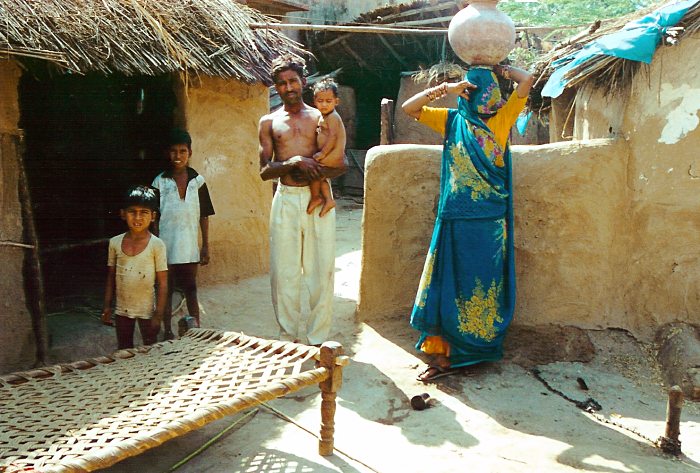
Not Indians, apparently: An article in Wired by Jennifer Kahn called A Nation of Guinea Pigs, describe how drug companies are conducting clinical trials in South Asia, using tens of thousands of poor Indians as "guinea pigs."
Fellow blogger Chris MacDonald does a nice job of outlining the ethical issues:
- Drug companies pay hospitals and doctors to enroll patients in drug trials. The potential for conflict of interest is clear: hospitals and doctors, far from wealthy themselves, may succumb to financial temptations to enroll patients inappropriately. Of course (and with a few important differences) the same worry applies here in North America.
- Most of the people being enrolled in trials are poor, illiterate, and culturally deferential to doctors. Their ability to give free and informed consent is questionable.
- Most of the drugs being tested are drugs that are irrelevant to the health needs of a nation like India; they're mostly medicines (like blood-pressure drugs) aimed at the North American & European markets.
Kahn points out that the path of medical progress is strewn with cases of questionable ethics, desperate practices, and misguided experimentalism, if not outright exploitation. And since patients with the fewest options are invariably the ones most likely to try (or be forcibly volunteered for) risky new treatments, be it an artificial heart, an unproven pill, or a radical lobotomy, they're also the ones who bear the brunt of medicine's experimental nature. In this light, outsourcing trials to a country where decent medical care is scarce, and medication scarcer, is just the globalization of an old equation. Can this really be justified?
Photo source: http://www.sights-and-culture.com/India-country/India-village1.jpg
Thursday, March 02, 2006
Dopes Like You and I to Blame for Olympic Doping?
Art Caplan's article at MSNBC The losing battle against doping
The return of the Olympics has renewed questions about the use of drugs and medical science to enhance athletic performance. In the last Winter Olympics in Salt Lake City, the Nordic skiing and cross country skiing teams were beset with doping scandals. The biennial outbreak of doping tests, charges, lies and expulsions leads naturally to the question about the ethics of using drugs to improve performance. While improved technology has given us the ability to detect the subtle, stealthy drugs, the same technology is also allowing for the development of subtler, stealthier drugs. Caplan argues that most of these performance-enhancing drugs are dangerous, risky and unsafe to use and using them to cheat is wrong from a normative point of view.
Caplan contends that, at the end of the day, integrity, as much as technology, will keep the Olympics drug-free. But, if “your countrymen only see gold medals as making the competition worthwhile, and if you yourself are competing with one eye on the opposition and the other on your endorsement contract, then integrity is in trouble.” If fame, honor, and money go only to those who cross the finish line first, then no matter what, the athletes will cheat. Public opinion, as in you and I, are as much responsible for doping in Olympics as unethical athletes and coaches.
Read more
Too bad you’re gay…worse if you’re gay and black…fatal if you’re gay, black and female
South Africa made international news in December last year when it became the fifth country in the world and the first in Africa to legalize gay marriage. This, while homosexuality remains illegal in neighbouring African countries, is perhaps indicative of the atmosphere of tolerance that South Africa has prided itself on since its oppressive apartheid regime gave way to democracy in 1994.
But recent events raise the question: does the tolerance towards the gay community reflected in South Africa’s legislation on gay marriage extend to the daily, lived experiences of gay men and women? Tolerance, acceptance, and personal freedom are themes far removed from the events that have made headlines this year regarding gays and lesbians.
First, there was the South African National Blood Service’s (SANBS) decision to exclude all sexually active homosexual men from donating blood, following a statement asking gay people not to donate blood if they have had sex (safe or not) in the past five years, which sparked outrage among the gay community. While the SANBS stuck by its decision, claiming that “international medical reports indicate that men who have sex with men show increased risk of infection with HIV and other blood infections,” members of gay activist and human rights groups argued that the SANBS’s position was not based on local HIV statistics and contributed to the stigmatization and marginalization of the gay community.
If the comments of some African leaders are anything to go by, being gay and black invites more palpable discrimination. Zimbabwe’s president, Robert Mugabe, for example, “called homosexuals ‘worse than pigs and dogs’ and a Namibian minister urged a group of police constables to ‘eliminate’ gays and lesbians from the country.” Even within the borders of South Africa’s democracy and liberal constitution, black, gay individuals face discrimination, prejudice and ostracism daily. And, more than occasionally, violence.
Being black, gay, and female apparently makes you a target for even more savage acts of homophobic hatred: early last month, a 19-year-old lesbian from the Khayelitsha township was clubbed, kicked and beaten to death by a mob of young men. And the slow reaction to her murder amongst the media and police has not been met with much surprise by township gay men and lesbians, who face verbal and physical abuse, rape and intimidation on a daily basis, and for whom “police inertia over hate crime is par for the course” (Marianne Thamm, “Not just another murder” in print edition of Mail&Guardian, Feb 24 – March 2).
Here is another problem generated by a patriarchal belief system, it seems. According to Dawn Betteridge, director of the Triangle Project, “…adopting the clothing and behaviour typical of a ‘butch lesbian’ or the ‘effeminate male,’ is perceived as a threat to masculine dominance…Lesbians who mimic men are seen to be challenging male superiority. Rape and violence against lesbians is common…men who perpetrate such crimes see rape as curative and as an attempt to show women their place in society.”
“Corrective rape, where men try to ‘cure’ a lesbian by forcing her to have sex, still happens, according to gay activists.” Nineteen year-old Zoliswa Nkonyana did not receive this cure. Instead, she, and her lesbian ‘threat’ to masculinity, were simply eliminated. Perhaps the legal team for members of the mob who beat her to death will argue in their defense that, for these youths, ‘prevention’ seemed better than cure...
Wednesday, March 01, 2006
Isn't preventing unintended pregnancies a good thing?
The Guttmacher Institute came out with a report yesterday that showed that from 1994 to 2001, 33 states have made it more difficult or more expensive for poor women and teenagers to obtain contraceptives and related medical services; these states cut funds for family planning, enacted laws restricting access to birth control and placed tight controls on sex education.
So query, at a time when policymakers have made reducing unintended pregnancies a national priority, and there is such a huge push to restrict access to abortions, why this schizophrenic approach? As Sarah Brown, director of the nonpartisan National Campaign to Prevent Teen Pregnancy, said "The most powerful and least divisive way to decrease abortion is to reduce unintended pregnancy... "If we can make progress reducing unintended pregnancy, we can make enormous progress reducing abortion."
The War on Science and Plan B
Susan F. Wood, former assistant commissioner of women's health at the Food and Drug Administration, has an op-ed in the Washington Post this morning in which she has some very powerful things about the responsibility of federal health agencies, evidence-based medicine, and Plan B:
"At every stop I am reminded that whether it is the environment, energy policy, science education or public health, the American public expects our government to make the best decisions based on the best available evidence...
Time and again in my travels I am asked, "What happened to derail Plan B?" I have to answer honestly that I don't know. The manufacturer agreed to take the "controversial" issue of young teens' access to emergency contraception off the table in 2004; now we are talking only about adult access to safe and effective contraception. Over 98 percent of adult women have used some form of contraception. So what is the objection?
Perhaps it is that posed by a small but vocal political minority that insists on labeling emergency contraception as abortion, or at least confusing the two. One of the main questions I hear is, "Does this pill cause an abortion?" In fact, the only connection this pill has with abortion is that it has the potential to prevent the need for one. Emergency contraceptive pills work exactly the same way as other birth control pills, and they do not interfere with or harm an existing pregnancy. Emergency contraception is simply a higher dose of daily birth control pills; it is not RU-486, the "abortion pill." Indeed, emergency contraception has been used as a method to prevent unintended pregnancies for decades by women who had physicians advise them on how many pills in their regular pill pack to take. So people who are comfortable with oral contraceptives as methods of contraception should be just as comfortable with emergency contraception."
It is a disturbing commentary that such a small but vocal group has such pervasive influence that it can effectively cause well-educated individual to ignore scientific evidence... how does one combat this?
Subscribe to:
Posts (Atom)