[Hat tip to colleague Terry Tomsick for bringing this to our attention] In a recent MSNBC article, bioethicist Art Caplan ponders the question "Would you have allowed Bill Gates to be born? Advances in prenatal genetic testing pose tough questions". Upon hearing the very sad
news this past week about the death of chess champion Bobby Fisher – I had to ask the same question: Would you have allowed Bobby Fisher to be born?
While we don't know for sure, Fisher's outrageous and at times hateful and bigoted behavior may have been caused by Asperger's syndrome which is part of the autistic spectrum . Or perhaps Fisher suffered from having an "extreme male brain" as characterized by Simon Baron Cohen, PhD, MPhil, a professor of developmental psychopathology in the departments of psychiatry and experimental psychology, a Fellow of Trinity College, Cambridge, and director of the Autism Research Centre at the University of Cambridge, in the United Kingdom, and author of the book "The Essential Difference: The Truth about the Male and Female Brain".
We may never know the truth but it would be tragic if he were simply remembered as a hateful, reclusive genius and not for the many accomplishments he brought to the world.
Dr. Caplan captures the key bioethical challenge these new genetic technologies and our understanding of the brain pose:
As genetic testing moves into the world of mental health, we are going to face some very tough questions. Will medicine suggest that any and every variation from absolute normalcy is pathological? How can we draw lines between disabling diseases such as severe autism and
more mild differences such as Asperger's, which may give society some of its greatest achievers? Will parents have complete say over the kind of children they want to bear? And what sorts of messages will doctors and genetic counselors convey when talking about risks, probabilities and choices that involve not life and death but personality and sociability, genius and geekiness?
Neither medicine nor the general public are at all ready to deal with the emerging genetic knowledge about autism, Asperger's or other aspects of mental health. But the future of our society may well hinge on how we answer these questions.
Bobby Fisher: May you rest in peace.
Tuesday, January 22, 2008


Monday, January 21, 2008
UK will allow human-animal hybrids for stem cell research
On January 17, the UK's Human Fertilisation and Embryology Authority (HFEA) granted two universities 1-year licenses to pursue the development of human-animal embryos for research purposes. This is a reversal of prior policy, which banned such transgenic experimentation.
The ultimate aim of this work will be to develop personalized stem cells that can be used to cure disease. The researchers will clone individuals with serious illnesses by inserting their DNA into enucleated cow and rabbit eggs, resulting in hybrid embryos from which stem cells can be extracted. The hybrid embryos are to be destroyed no later than 14 days after they are created. It is hoped that using patients' own DNA in this process will reduce (or, better still, eliminate) the risk of transplant rejection (graft vs. host disease) when the stem cells, or organs grown from them, are implanted in the patient's body.
The UK's approach sidesteps at least two issues that have been problematic for scientists in the US: (1) the destruction of human embryos question (because they're hybrids, not solely human), and (2) the problem of gathering a sufficient number of donated human ova for research purposes. It's at least a little bit interesting to note that public opinion in the UK generally favors this approach, even as the rejection of genetically modified "Frankenfoods" continues to be reported in the news there.
However, US opinion has been quite strongly against such transgenic experimentation, generally because of concerns of developing chimeras with human (or human-like) consciousness. Additionally, the requirement that the chimera embryos be destroyed within 14 days of creation is probably pretty close to unenforceable-which gives rise to the kinds of nightmare scenarios Margaret Atwood contemplated in Oryx & Crake ("baby orchards" for organ transplants).*
So: Does the HFEA's approach create more problems than it solves? Talk amongst yourselves.
News here: The Guardian, Financial Times
*And yes, that's another WBP Book Club selection! Go here for more info.
Sunday, January 20, 2008
2008 State of the States
 For folks looking for a good primer on the "state of the states", Stateline.org has published their State of the States 2008 pamphlet. In this, they discuss subjects as broad as the various states both funding and banning human embryonic stem cell research, as well as state abortion laws, Romeo and Juliet laws, campus security, same sex marriage laws, and more. It's 75 pages of data, graphs, and trends - well worth reading for anyone interested in health care, policy, and federalism.
Of particular interest to me was Christine Vestal's analysis of states attempting to attract prominent stem cell researchers to grow their hESC research facilities into world class research labs. Once the fear was federal stem cell research laws would create a brain drain of science talent, as American scientists picked up and moved to countries more open to doing hESC. Now, the concern is the state next door, as California, Connecticut, Illinois, Maryland, New Jersey, New York and Wisconsin have awarded nearly $250 million in grants, which is three times more than the federal government spent in the same time frame.
While some states consider how to keep up with the funding next door (Iowa, Massachusetts and Missouri), others have simply bowed out of the stem cell race (Arkansas, Indiana, Louisiana, Michigan, North Dakota and South Dakota).
The State of the States 2008 document appears to be a great resource, full of interesting information. For example, did you know that 100 bills both for and against hESC research were considered in 39 states, but only three laws actually enacted? (New York State approved its hESC research funding, Iowa repealed a ban, and Illinois confirmed an executive order.)
While the ethics of the research are briefly mentioned (and Jonathan Moreno is quoted, albeit in another section of the article), overall they are given rather short shrift. That flaw aside, however, this appears to be a valuable addition to any researchers stack of pdfs.
-Kelly
More on Big Pharma and Disclosure
I want to agree with Kelly Hills that the FDA as currently structured and funded is not capable of reviewing the information disclosed by insurance companies. It must be a two part plan. First, all the data must be disclosed so that anyone, including independent oversight groups, can look at the data. But second, the FDA needs to be given resources to do the kind of review of this data that safety requires before releasing a drug on the market. Others know more about this than I do, but I have not seen any particular evidence that the FDA has become so politicized that they would not do this review if they had the resources. If, however, that were the case then it would be necessary to fund independent oversight.
Do You Have a Fear Of Clones?
 One of the news items that seems to have generated the most buzz on the bioethics blogs is this week's decision by the FDA to allow the sale of meat from cloned animals -- we've posted on it, blog.bioethics.net has, the Business Ethics Blog has, and Art Caplan has written a column on it. And now, an Rick Weiss of the Washington Post reports that consumer groups are pressing for labeling, but the concern is that the labels may not be able to be verified. Additionally, the article reports, consumer groups are wondering "how the FDA will live up to its promise to keep an eye on the quickly evolving field of animal cloning and protect the public from unexpected problems."
It seems to me that Art says it all when he says "Don't ask, don't tell is bad policy for cloned food" (or any food, I might add) and that consumers will have the last word.
Closing the Loopholes for Big Pharma
Today's New York Times reports that about a third of the studies done on Paxil and Prozac went unpublished and (not surprisingly) if those studies were included these drugs were much less effective than when only the positive studies were published. http://www.nytimes.com/2008/01/17/health/17depress.html?
This is only the latest in a series of revelations about the way that pharmaceutical companies (“Big Pharma”) control the data about new drugs which they make available to the FDA in seeking approval and then to the public. No one disputes that these failures to disclose are harmful to the public’s health. Doctors prescribing drugs and using medical devices must have complete information in order to make the best treatment decisions. However, what is lost amidst the hand-wringing is that there is a very simple way to end this pattern and to make this information available to those who need it: require that all information, positive and negative, about drugs submitted for approval to the FDA be made available to a public data base. Current regulatory changes to require greater disclosure are inadequate because if there are any places left to hide negative data, Big Pharma will find a way to get there. Moreover, the arguments that it is somehow unfair to require companies to benefit from information about what doesn't work makes no sense because companies would only have to disclose AFTER they decide it is worth submitting the drug for approval.
Pharmaceutical companies are businesses like any other and are entitled to make a profit and to keep business information private—but only to the extent that it does not harm the public’s health. Having a drug approved for sale in the United States by the FDA is a privilege and it should come with the responsibility of making available all the available information—not just the information which the company chooses to disclose.
While it has always been the case that pharmaceutical companies were able to hide negative results in studies they conducted themselves, the need is much greater following a recent Supreme Court decision, Garcetti v. Cebalos, which held that government employees do not have First Amendment protection for divulging information—even information vital to the public’s safety-which they learn at work. Most people do not know that a growing number of research companies conducted by pharmaceutical companies are channeled through academic medical centers. While Garcetti v. Cebalos, did not involve research scientists it clearly suggests that a medical researcher at a state university which conducts drug trials for pharmaceutical companies could put his or her job at risk by divulging negative results. This silencing of whistleblowers means that without specific legislation that requires the disclosure of all data, wherever acquired, companies can continue to shield negative results from public view.
Of course is o.k. for pharmaceutical companies to make a profit, just as it is for auto companies, but when the product is one that can endanger the public’s health there must be a requirement of full disclosure.
Jennifer S. Bard, J.D., M.P.H.
Alvin R. Allison Professor of Law and Director, Health Law Program Texas Tech University School of Law Associate Professor (Adjunct) Texas Tech University School of Medicine
1802 Hartford Avenue
Lubbock, Texas 79409-0004
Jennifer.Bard@ttu.edu
806.742.3990, ext. 349
http://www.nytimes.com/2008/01/17/health/17depress.html?ex=1201237200&en=bff3cb16e49ff5f0&ei=5070&emc=eta1
UCSF Scrambles to Undo Damage
As I wrote about earlier this week, UCSF researchers released a study linking a new drug-resistant strain of staph known as MRSA USA300 to the gay community, prompting worldwide headlines that read such 1980s flashback headlines as "FLESH-EATING BUG SPREADS AMONG GAYS" and "EPIDEMIC FEARED--GAYS MAY SPREAD DEADLY STAPH INFECTION TO GENERAL POPULATION". Aside from fueling general fears, the report (and headlines) gave ammunition to anti-gay groups like the Concerned Women of America, who used this latest research as a rallying point for their point of view that homosexuality is sexually deviant behaviour, and these infections are proof of it. And while conventional wisdom says everything becomes a fad 20 years after it was originally around, this is one particular period of the 80s I think we could all do without.
Anyhow, the UCSF researchers actually appeared to realize the damage done, and are waging a media war of their own to undo the inaccurate media reports, misconceptions of what their study said, and undermine groups who are trying to twist their study for other agendas. On Friday, the university and its researchers issued an apology, saying
What is interesting about this is the acknowledgment by Dr. Chambers that they did not think outside their own discipline when writing their report or releasing the study. While that limited view and hyper-focus was a common and accepted part of a pre-internet academic community, which relied on published journals to transmit information - guaranteeing that at least the media would have to wait to attempt to stir up sensationalist claims. These days of electronic media, however, lead to a situation of electronic publication of paper results, which is how the UCSF MRSA USA300 report was made public. With that comes instant reporting, instant response, and the emphasis moves away from accuracy and towards sensationalism, an effort to attract the viewer eye. How do you compete with that?
The answer, it seems, is simple. You play the same game. Instead of ignoring the potentials of the internet for rapid information dissemination, for instant response, you do what Dr. William H. Parker, clinical professor of obstetrics and gynecology at the University of California, Los Angeles School of Medicine did. You fight fire with fire, create your own email messages with accurate information you encourage people to forward on, and make sure when you release your research results to the public, you consider both your academic peers and the lay people who will see the research. This might mean writing a "dumbed down" or accessible version of your report for release to general media outlets - but isn't that preferable to having your research misinterpreted and misreported?
-Kelly
Anyhow, the UCSF researchers actually appeared to realize the damage done, and are waging a media war of their own to undo the inaccurate media reports, misconceptions of what their study said, and undermine groups who are trying to twist their study for other agendas. On Friday, the university and its researchers issued an apology, saying
their release had “contained some information that could be interpreted as misleading.”
“We deplore negative targeting of specific populations in association with MRSA infections or other public health concerns,” it concluded. Dr. Henry Chambers, one of the report’s authors and a professor of medicine at the university, said he was surprised by how the report had been spun.
“I think we were looking at this from a scientific point of view and not projecting any political impact,” he said. “We were focusing on the data. You want to make sure it’s as right as possible and written up in a form that reviewers would understand what you’re trying to say, and do it in a clear manner so it’s not subject to misinterpretation. Which is what happened later, it appears.”
What is interesting about this is the acknowledgment by Dr. Chambers that they did not think outside their own discipline when writing their report or releasing the study. While that limited view and hyper-focus was a common and accepted part of a pre-internet academic community, which relied on published journals to transmit information - guaranteeing that at least the media would have to wait to attempt to stir up sensationalist claims. These days of electronic media, however, lead to a situation of electronic publication of paper results, which is how the UCSF MRSA USA300 report was made public. With that comes instant reporting, instant response, and the emphasis moves away from accuracy and towards sensationalism, an effort to attract the viewer eye. How do you compete with that?
The answer, it seems, is simple. You play the same game. Instead of ignoring the potentials of the internet for rapid information dissemination, for instant response, you do what Dr. William H. Parker, clinical professor of obstetrics and gynecology at the University of California, Los Angeles School of Medicine did. You fight fire with fire, create your own email messages with accurate information you encourage people to forward on, and make sure when you release your research results to the public, you consider both your academic peers and the lay people who will see the research. This might mean writing a "dumbed down" or accessible version of your report for release to general media outlets - but isn't that preferable to having your research misinterpreted and misreported?
-Kelly
Saturday, January 19, 2008
Live Streaming Video from the NC Science Blog Conference

Alas, I could not attend the North Carolina Science Blogging Conference because of a conflict, but I am so pleased to see that I can attend virtually at the this web site. As fellow blogger Jennifer Ouellette says on her blog, "Blogging can be a somewhat isolated activity. Sure, there's comments and linkages and fostering online conversations and such, but generally I just plug along, cranking out my two or three posts a week on whatever topic captures my whimsy that day. Honestly? Sometimes I forget that I'm not blogging in a void. Today was a nice reminder that I'm part of a large, vibrant community that is changing the face of science, science journalism, science education, and science communication in some very exciting ways."
So far, the sessions are very informative and interesting -- check it out! What science blogger do you know who has cocktail recipes on their blog, like this one?:
The Black Hole
So called because after one of these, you have already passed the event horizon of inebriation.
1 oz. Kahlua
1 oz. vodka.
.5 oz. Cointreau or Triple Sec.
.5 oz. dark rum
.5 oz. Amaretto
Pour into an old-fashioned glass over (scant) ice. Stir gently.
Watch time slow.
Next year, I have to go this!
Biobanking and you

Imagine this scenario: you're a healthy person, no major complaints. You go for your annual physical exam, and you have a couple of blood tests--standard stuff, checking to make sure your cholesterol's ok, you're not anemic, etc. A couple of weeks go by, you get a card in the mail that says everything's fine. End of story, right?
Maybe not.
Now imagine that the hospital or clinic has retained the blood left over from the tests your dcotor ordered. And further imagine that the hospital or clinic has what's called a biobank or biorepository--that is, a collection of stored tissue for use in research. Your DNA is extracted from the blood sample and sequenced--which means that some piece of your genotype is now known to some researcher (but not to you). In some institutions, this couldn't happen without your explicit (written) informed consent; but in others, it's standard practice that "waste tissue" from blood tests, pathology samples, etc. becomes the property of the hospital or clinic. Should informed consent be required, or is an opt-out model more appropriate?
Generally speaking, biobank participants' DNA samples aren't associated with their name, Social Security Number, street address, or other information traditionally considered "identifying"--but the reality is, nothing is a more precise identifier of who you are than your so-called genetic fingerprint. Is this worrisome?
I'd be interested to hear what others think about this--and, fair warning, I am likely to be asking more questions along these lines, as the DNA biobanking issue is on my mind a lot these days!
While I'm at it, here are two references for further reading, if you are so inclined. The Stored Tissue Issue, from Robert Weir, Robert Olick, and Jeffrey Murray, is an academic treatment of the issues. Michael Crichton's Next is an entertaining look at some of these questions--and it just happens to be a WBP Book Club selection.
Bark, Bark, Woof, Woof -- Lassie Speaks
 It was thought for the longest time that humans were the only species that could 'speak' -- then came along Washoe and Koko and Alex, and now, Hungarian researchers have written a promising program that could translate the meaning of dogs' barks, and it could applied to other species as well.
Yet another indication to revisit and enlarge our moral universe.
Friday, January 18, 2008
Medical FICO Scores
There is some talk about getting a Medical FICO score. A FICO score has, so far, been used to judge the credit worthiness of consumers. This Medical FICO scores takes it a step further and finally admits, what the medical industry has known so far: Hospitals dont view the relationship between a doctor and a patient as that of a physician-patient relationship, but that of a provider and a consumer.
I dont disagree with the concept necessarily. The health industry has long been known for losing money on certain patients, and making up money on others. This seems like a way to fix the leakiness problem.
On the other hand, this sounds like a really bad idea from the perspective of a patient, especially because of the multitude of ways it can be expanded. Today, they talk about ability to pay. However, once enough data has been accumulated, the data can be mined to see what was being paid for. What health risks does this patient inherently have? If this patient has risks, maybe we can view her as a "repeat customer." This can lead to targeted ads on one end, and lack of treatment for chronic sufferers on the other end.
I worry about the slippery slope!!
Supremes tell Abigail no: why this is a good thing
Earlier this week, the US Supreme Court declined to hear the appeal of the Abigail Alliance--news from the LA Times here. The advocacy organization sought to change the Food and Drug Administration's policy of prohibiting the use of experimental and unapproved drugs to treat patients. While there are procedures on the books for compassionate use, which allows access for some patients to some drugs under some circumstances, the Abigail Alliance and its supporters believe that the current approach is too narrow, too onerous, and too time-consuming to help all those who could benefit. They sought to make access easier for terminally ill patients who are unable or ineligible to participate in clinical trials.
The Abigail Alliance makes a stirring argument: none of us would want to feel that we were unable to get access to the "silver bullet" that would make our loved one (or ourselves) well again or extend life because of some bureaucratic requirement. And certainly the story of Abigail Burroughs--by all accounts a lovely young woman, who died of a rare form of cancer when she was just 21--is terribly sad.
But does it mean FDA is wrong to deny access to unproven drugs? I don't think so. The FDA's mission is to ensure that the medicines and devices we use to improve human health are safe and effective. This is a vital function and one that must be preserved.
We--by which I mean the general public--have a tendency to assume that drugs are good, that they work, and that they generally don't make people sicker. This is not a great assumption: check out the news earlier this week about Zetia and Vytorin (cholesterol drugs that could actually increase atherosclerosis), or the Vioxx settlement (a pain-reliever that caused heart attacks and strokes in some patients), or reports that suggest that several common drugs for schizophrenia may increase diabetes risk, or fen-phen (an off-label use for weight loss caused permanent heart damage in some patients). These are just a few examples. Drugs can be dangerous. They can make people sicker, and in some cases, they can give people worse problems than they started out with.
"Aha!" the advocates say, "But what about if somebody is already dying? They're as sick as they're going to get. Surely they should be granted access!" Still, in general, I think not. Patients who are terminally ill are the very last people we should be treating with unproven agents. Clinical trials aren't all beer and skittles: If you doubt that drugs can be dangerous, check out reports of the TeGenero trials last summer, in which 6 previously healthy young men ended up in the ICU with permanent immune system damage. These were Phase I safety trials, not Phase II--the category the Alliance wants to make available--but my point is, should we really subject patients to such an ordeal in the pursuit of what is likely an understandable, but unrealizable, dream of a cure?
A key point to understand is that research is different from treatment. Research is directed toward the development of new solutions, and it may or may not benefit those individuals who volunteer to participate. It sounds harsh, but helping volunteers isn't the point of research. Treatment, on the other hand, is all about managing symptoms and effecting cures. It's just plain wrong to represent one as the other.
The legal questions are more subtle: argument in the original case focused on whether terminally ill patients have a Constitutional right to drugs that have passed Phase I clinical testing. Our very own Linda Glenn did a nice overview here.
Thursday, January 17, 2008

NYS Supreme Court Case Stirs Ethical Debate
As is being being reported in numerous outlets, the NYS Supreme Court will be hearing a civil case filed against NewYork-Presbyterian Hospital by a construction worker who underwent an involuntary rectal examination as part of his trauma assessment. The plaintiff is claiming assault, battery, and false imprisonment for being restrained, sedated, and examined against his wishes. The hospital's response, of course limited due to HIPAA requirements, is that the plaintiff was brought to the ER with head trauma, was combative, and needed to have severe head trauma ruled out. (Apparently a rapid way to assess injury to the nerves of the spinal cord is to check rectal sphincter tone.) The plaintiff resisted, was sedated, and when brought out of sedated, punched a doctor in anger, and was arrested for assault.
None of this in itself is particularly new or newsworthy; it is a continuing debate of what constitutes emergency care, standard care, informed consent, and what it means to have decision making capacity. These debates have been going on for years, and will likely continue for as long as any of us can envision.

No, the interesting thing actually comes from the commentary at City Room, the NYTimes local blog. Reading through the comments gives an eye-opening view into the way the general public perceives medicine, emergency medical care, and doctors. The most fascinating, and oft-repeated claim, is that if the patient (plaintiff) could be be arrested for assault, then he was obviously competent to decide his medical care - that, as one commenter put it,
Of course, the best retort to that (also brought up in comments) is that a drunk person is not competent to make decisions - yet is still responsible for the actions they take while drunk. (Also of note is that no one claiming specific background and training in medical ethics has spoken up in the thread. For those of you reading this, with the limited information available, what's your take on the situation?)
Obviously the message of personal autonomy and the basic idea of informed consent has permeated our society, but at a very simplistic level that might actually cause more misunderstanding and difficulty when treating emergency medical cases than potential good. The question becomes then, how do we increase the general knowledge level of the lay person while still emphasizing autonomy, while simultaneously acknowledging the education and superior knowledge of the physician without falling back on paternalism?
For anyone interested in this line of thought, the comments in that thread are well worth the read, and the contemplation.
-Kelly
None of this in itself is particularly new or newsworthy; it is a continuing debate of what constitutes emergency care, standard care, informed consent, and what it means to have decision making capacity. These debates have been going on for years, and will likely continue for as long as any of us can envision.
No, the interesting thing actually comes from the commentary at City Room, the NYTimes local blog. Reading through the comments gives an eye-opening view into the way the general public perceives medicine, emergency medical care, and doctors. The most fascinating, and oft-repeated claim, is that if the patient (plaintiff) could be be arrested for assault, then he was obviously competent to decide his medical care - that, as one commenter put it,
if the patient’s competence is questioned regarding his ability to make an informed decision, then it’s inconsistent to charge that same incompetent person with assault.
Of course, the best retort to that (also brought up in comments) is that a drunk person is not competent to make decisions - yet is still responsible for the actions they take while drunk. (Also of note is that no one claiming specific background and training in medical ethics has spoken up in the thread. For those of you reading this, with the limited information available, what's your take on the situation?)
Obviously the message of personal autonomy and the basic idea of informed consent has permeated our society, but at a very simplistic level that might actually cause more misunderstanding and difficulty when treating emergency medical cases than potential good. The question becomes then, how do we increase the general knowledge level of the lay person while still emphasizing autonomy, while simultaneously acknowledging the education and superior knowledge of the physician without falling back on paternalism?
For anyone interested in this line of thought, the comments in that thread are well worth the read, and the contemplation.
-Kelly
Wednesday, January 16, 2008
As they say in Hollywood, "It's just an honor to be nominated,"
 We were grateful for being given the honor of being nominated in the Best Health Policies/Ethics Weblog Category of the Medagadget's annual Medical Weblog Awards. Congratulations and best of luck to the finalists! -- you can cast your vote here.
Goats in the Road and their cloned CAFO cousins
 Some notes from my recent travels:
I'm spending some time with my husband, Kim, in Timor Leste, where he is working on a land tenure property rights program; it is a poor but naturally beautiful country, struggling to regain its independence after a long term occupation. During his pre-dawn jogs, Kim is amused to encounter herds of goats clustered in twos and threes, nestled together in road determined to enjoy last few moments of their nights' rest. They barely flick an ear as he weaves between them, appearing to be no more than darker shadows in the dim morning light; they know the road belongs to them, at least until the break of day. This pre-dawn sedentary determination belies their youthful exuberance during the day. I think of their american cousins in the CAFOs, the FDA's approval of the sale of cloned meat, and it prompts me to consider the relative quality of life of the livestock in Timor Leste as compared to the livestock in the Industrial Food Chain in the US.
What strikes me is that we, in the US, while priding ourselves in the humane treatment of our companion animals, turn a blind eye towards the cruelty of the livestock in our industrial food chains, our CAFOs -- the CAFOs that feed the fast food, cheap food, sugary food industry, arguably the food industry chain that is eroding the quality of life of humans in the US.

My observation is that the goats, pigs, cows, and chickens in Timor Leste have a much more interesting, satisfying, and likely, longer lives than their supposedly "free range" US cousins.
While not meaning to diminish the extreme poverty of the human condition in Timor Leste, the everyday presence of the goats, pigs, cows, and chickens are a reminder that we can learn something about importance of recognizing our interconnectedness and the potential dangers of disconnection and disassociation -- and about the infinity diversity of living things with which we share the planet.
[Addendum, Jan 20, 2008: Colleague Art Caplan writes that Don't ask, don't tell is bad policy for cloned food. -- I might add I think it's bad policy for food in general. Also, Chris MacDonald at the Business Ethics Blog gives a different perspective. ]
Tuesday, January 15, 2008
Casual Contact MRSA
 BBC News is reporting something that some have undoubtedly already heard about: that there is a new MRSA strain, USA300, which varies significantly from the MRSA strains we've seen in the past: it's acquired in the community, from skin to skin contact, and not hospital settings.
Up until now, hospitals have been the tried and true mode of infection with any of the multiple drug resistant bugs in our environment, and for decent reason: hospitals, for all their efforts at sterility, house the sickest of the sick, and prove to be breeding grounds for antibiotic resistance.
What's noticeable about USA300 is two things. First is the fact that it's transmitted in the community, by skin to skin contact. While this is generally sexual contact, any sort of prolonged contact with another's skin is enough for transmission, and there is already evidence that this high contact no sex transmission has taken place.
The second interesting thing is that reporting of MRSA USA300 has reminded me of the initial reporting of HIV/AIDS back in the 1980s, albeit on a larger scale. And it might just be my memory of the San Fran/Bay Area reporting filtered through multiple books, novels, and movies, but the tone of the articles - "new outbreak in San Francisco gay community", "gay men affected by new skin to skin disease", etc - is eerily familiar. And I can't decide how I feel about this. On the one hand, it's only responsible to make sure it's clear everyone knows whether or not they're in a vulnerable population group. But on the other hand, it seems like it's walking dangerously close to stigmatization, again. This is alleviated by the acknowledgment of casual, non-sexual skin to skin transmission, but that seems overshadowed by the general tone of the articles I've been reading.
Perhaps most of all, it's disappointing. I would have hoped that these 20-odd years later, people would have learned how to write about an emergent infectious disease without creating, intentionally or otherwise, a stigmatized population group to go with it.
-Kelly
 I'm editing this some six hours after the initial post, because I wanted to put up a picture of the kinds of headlines I'm referring to, as well as a link to the Google News collection of these stories - all of which have a disturbingly similar theme in their headlines. Click on the image above to see them all.
Monday, January 14, 2008
Which comes first, the drug or the disease?

Today's NYT reports that Pfizer has begun direct-to-consumer advertising for their drug, Lyrica. It's not a new medication, having been approved for some time for the treatment of nerve pain (as experienced by some people with diabetes or shingles).
What's news is that the advertisements are for a new indication: fibromyalgia. Fibromyalgia is a condition for which no definitive diagnosis exists, and its cause and mechanisms are not understood by medical science. People who have it, most of whom are middle-aged women, complain of chronic, widespread pain and tenderness, as well as extreme exhaustion.
But whether fibromyalgia really exists is a contentious issue. Those who suffer from fibromyalgia insist that it is a real, and debilitating, problem. Numerous advocacy and support groups exist online and offer individuals the chance to compare notes with fellow sufferers. Skeptics charge that it is essentially a psychosomatic complaint--i.e., "it's all in their heads."
A few features of this story are worth comment (in my view, anyway). One is that we should be aware of the long-standing tendency of the medical establishment to minimize symptoms it can't explain by saying they are psychological--i.e., not "really real," and outside the purview of "real medicine." Many of these conditions (like irritable bowel syndrome, multiple chemical sensitivity, and chronic fatigue syndrome) tend to affect middle-aged women more than other groups. Coincidence? Maybe. But maybe not. Either way, it's worth thinking about whether these issues are being too easily dismissed.
Another is the influence that pharmaceutical companies have in our society over what "counts as" illness or disease. On one view, if there's a drug for it, then it's a disease. Thus shy people may actually suffer from social anxiety disorder and require Paxil; short people might have idiopathic short stature and need human growth hormone; and the list goes on. Is this trend toward medicalization a good thing? What does it mean, in practical terms, when we move a condition from the "some people are like this" (normal human variation) column into the "people who are like this have a disease" (illness) column? Who benefits from those effects?
One more thing to consider: the challenge of pain. As a subjectively experienced phenomenon, it's tough for medicine to deal with. Most medical problems are objectively measurable in one way or another, but pain is particularly tough to pin down. People have different pain thresholds, experiencing more or less pain in response to the same stimulus. It's been the standard view for a while now that women experience pain differently from men, though whether these differences are biological or social (or both) is still unclear. And the data source for pain? We mainly have to rely on self-report--and as a general rule, science doesn't like self-reported data. But the flip side could mean denying needed relief to people who are suffering ... and who wants to do that?
Better Schooling Through Biology
Nancy Kalish, in a NYT Op-Ed advocates using biological research to provide guidance in reforming our education system in light of data that show adolescents would benefit from a high school schedule that started later.
Excerpt:
Moving the start time of high school back by one hour showed significant benefits, both specific to education and in peripheral gains, like student safety:
This is but one example of how science can constructively inform policy and provide a directed goal to which we can strive as we reform conventional methods that were influenced not by anticipated benefits, but from mere logistical necessity. With the significant shifts in lifestyle following the departure from an agrarian industry base and the advent of the Internet and other telecommunications technologies, there is no reason why we cannot come up with a system that is not just feasible, but beneficial to groups said policy seeks to benefit.
Excerpt:
Research shows that teenagers’ body clocks are set to a schedule that is different from that of younger children or adults. This prevents adolescents from dropping off until around 11 p.m., when they produce the sleep-inducing hormone melatonin, and waking up much before 8 a.m. when their bodies stop producing melatonin. The result is that the first class of the morning is often a waste, with as many as 28 percent of students falling asleep, according to a National Sleep Foundation poll. Some are so sleepy they don’t even show up, contributing to failure and dropout rates.
Moving the start time of high school back by one hour showed significant benefits, both specific to education and in peripheral gains, like student safety:
In 2002, high schools in Jessamine County in Kentucky pushed back the first bell to 8:40 a.m., from 7:30 a.m. Attendance immediately went up, as did scores on standardized tests, which have continued to rise each year. Districts in Virginia and Connecticut have achieved similar success. In Minneapolis and Edina, Minn., which instituted high school start times of 8:40 a.m. and 8:30 a.m. respectively in 1997, students’ grades rose slightly and lateness, behavioral problems and dropout rates decreased.
Later is also safer. When high schools in Fayette County in Kentucky delayed their start times to 8:30 a.m., the number of teenagers involved in car crashes dropped, even as they rose in the state.
This is but one example of how science can constructively inform policy and provide a directed goal to which we can strive as we reform conventional methods that were influenced not by anticipated benefits, but from mere logistical necessity. With the significant shifts in lifestyle following the departure from an agrarian industry base and the advent of the Internet and other telecommunications technologies, there is no reason why we cannot come up with a system that is not just feasible, but beneficial to groups said policy seeks to benefit.
Sunday, January 13, 2008
The "Stuff" of Morality: Is it Instinct or More?
I often ponder the morality of my motives.
Why did I really let the guy trying to cut me off on the 405 in ahead of me? Was it because I felt it was the "right" thing to do, or was it because I was just not up for the usual vehicle-to-vehicle combat, standard fare on LA's insanity-riddled freeway system? And if letting that person in was the "right" thing to do, why was it?
Or the homeless person standing in front of the fast-food, gas station or convenience store. Why would I feel compelled to hand over a few dollars to someone who would prefer asking for a hand-out, rather than becoming employed? Because I felt it truly was the "right" or moral thing to do--or for some other deeply rooted reason?
Why do any of us feel a thought or action is the morally "right" position to take under certain circumstances or in select situations? Is instinct the stimulus, or societal moral codes?
Consider the basis for the moral codes that might govern the following scenarios originally devised by psychologist Jonathan Haidt:
Julie is traveling in France on summer vacation from college with her brother Mark. One night they decide that it would be interesting and fun if they tried making love. Julie was already taking birth-control pills, but Mark uses a condom, too, just to be safe. They both enjoy the sex but decide not to do it again. They keep the night as a special secret, which makes them feel closer to each other. What do you think about that — was it O.K. for them to make love?
A woman is cleaning out her closet and she finds her old American flag. She doesn’t want the flag anymore, so she cuts it up into pieces and uses the rags to clean her bathroom.
A family’s dog is killed by a car in front of their house. They heard that dog meat was delicious, so they cut up the dog’s body and cook it and eat it for dinner.
Most people immediately declare that these acts are wrong and then grope to justify why they are wrong. It’s not so easy. In the case of Julie and Mark, people raise the possibility of children with birth defects, but they are reminded that the couple were diligent about contraception. They suggest that the siblings will be emotionally hurt, but the story makes it clear that they weren’t. They submit that the act would offend the community, but then recall that it was kept a secret. Eventually many people admit, “I don’t know, I can’t explain it, I just know it’s wrong.” People don’t generally engage in moral reasoning, Haidt argues, but moral rationalization: they begin with the conclusion, coughed up by an unconscious emotion, and then work backward to a plausible justification.
To view the complete article by Steven Pinker for NY Times Magazine in its entirety.
The Drama Surrounding “the Juice of Youth”: The FDA Weighs in on “Natural Hormones”
The popularity and perceived value of medications prepared by compounding pharmacies—particularly of hormone medications—is nothing new, and over the last several years has generated a tremendous surge in both interest and controversy fueled by endorsement of bioidentical hormones by celebrities such as actress Suzanne Somers, followed by subsequent complaints ranging from doctors to the Food and Drug Administration (FDA), in which both camps are critical of claims touting the “benefits” of the drugs and manner in which they’re prepared, as unsubstantiated marketing that could endanger the health of women not properly informed.
Somers states she’s only attempted to raise awareness and empower women to analyze and explore alternative HRT therapies available, rather than simply settling for synthetic preparations marketed by big pharma; on the one side, Somers’s supporters praise her courage and conviction, while her detractors are scathingly critical of her endorsement of drugs that they say have not been proven safe—as well as attribution to those they portray as dubious professionals with questionable credentials.
Last week the FDA publicly announced that there was no difference between hormone medications marketed as bioidentical, and prepared by compounding pharmacies, than those marketed as synthetic preparations manufactured by drug companies. The fallout from this stance of course is that compounders are not restricted from claims that their products are better. Many of those who support bioidenticals are convinced that the FDA’s public stance was based more in the drop in sales of commercial prescription HRT medications. Pharma giant Wyeth, no stranger to HRT controversy, has asked the FDA to step in against compounders, who are currently under state regulation, not federal. Again, women are caught in the middle in determining the best course of action.
Details in this blog article from the NY Times
The Bitterly Unfair Truth of Sexuality
 Caitlin Flannigan has an op-ed in the New York Times that uses the movie Juno as a starting point to discuss female sexuality. Specifically, she talks about the fairy tale nature of the film (don't read the op-ed if you've not seen the film and don't want the ending completely spoiled), and highlights what she calls
the bitterly unfair truth of sexuality: female desire can bring with it a form of punishment no man can begin to imagine, and so it is one appetite women and girls must always regard with caution.She goes on to make some very interesting points: that abortion, adoption, or even keeping a child is not an easy decision for a single woman, let alone a single teenage girl, and that very few woman escape from any of these decisions unscathed and able to return to who they were beforehand. (A sentiment I strongly agree with. While I don't buy into the supposed grief and regret that wracks any and every woman who's had an abortion, I do strongly agree that the experience forces significant change in a woman.)
Flannigan continues,
Even the much-discussed pregnancy of 16-year-old Jamie Lynn Spears reveals the rudely unfair toll that a few minutes of pleasure can exact on a girl. The very fact that the gossip magazines are still debating the identity of the father proves again that the burden of sex is the woman’s to bear. He has a chance to maintain his privacy, but if she becomes pregnant by mistake, soon all the world will know.And again, she makes a good point with a contemporary illustration - Jamie Lynn faces the burden of the pregnancy, the gossip, the everything. A guy can impregnant and run, emotionally distant if he so chooses - a girl doesn't have that option, no matter what choice she makes regarding her pregnancy.
Pregnancy robs a teenager of her girlhood. This stark fact is one reason girls used to be so carefully guarded and protected — in a system that at once limited their horizons and safeguarded them from devastating consequences. The feminist historian Joan Jacobs Brumberg has written that “however prudish and ‘uptight’ the Victorians were, our ancestors had a deep commitment to girls.”
It's hard to argue with the idea that pregnancy robs a teenager of her girlhood. Pregnancy forces a girl to start making decisions that affect her life, short and long term - and also to make decisions that will impact others (or at least potential others). Adolescence is the period of moving from a world revolving around self to a world of interacting with others, and anyone who's spent any amount of time around a teenager can tell you how rapidly they oscillate between the two. Pregnancy forces the hand; wild oscillations have to stop in the face of reality (at least, one hopes).
What then, is the answer, if any? As Flannigan also so rightly notes, it's not as though we have no deep commitment to our teenage girls. Unlike the Victorians, we place our emphasis on commitment elsewhere, not on safeguarding but empowering. We don't look at focusing on their chastity, but instead on empowering girls to believe that they can compete with boys, be better than boys, and don't need to be dependent on anyone but themselves. But to repeat Flannigan's question,
we have to ask ourselves this question: Does the full enfranchisement of girls depend on their being sexually liberated? And if it does, can we somehow change or diminish among the very young the trauma of pregnancy, the occasional result of even safe sex?I don't know that there is a neat answer to this, at least not when the country itself is divided, in so many ways, about teen pregnancy. And maybe, ultimately, the answer lies not in how we empower or protect the girls themselves, but how we treat those whose values and opinions differ than our own. Maybe the ultimate solution is to move further away from the Victorians, who protected that chastity with shame, and forget the entire concept of shame and sex.
...it's either that or find some way to subject teenage fathers to the same ostracization and stigmatization that pregnant teens are subjected to, and that seems like a much more difficult proposition.
-Kelly
Friday, January 11, 2008
Help your doc help you....
 The illustrious Dr. Jerome Groopman (who was recently interviewed on NPR) recently published a new book, How Doctors Think. It's an expanded version of an article he wrote for The New Yorker.
This is a more engaging read than one might think at first blush, in part because of Groopman's liberal use of stories and anecdotes. These illustrate the information he really wants to share with us: the facts that (a) doctors are not perfect, (b) they make predictable errors in diagnosis, often due to cognitive or emotional biases, and (c) we--the general public--can help doctors avoid these pitfalls if we know what they are. By asking, for example, "Is there anything else it could be?" or "Is it possible that I have more than one problem?" we can help the doctor consider options she may have overlooked.
So why is this relevant to you, the WBP reader? Well, two reasons leap to mind. The first is that women continue to play the role of healthcare decision maker for their families, and so we're often in the best position to ask the right question at the right moment. The second is that my own mom, and many other moms of my acquaintance, have shared their stories of "knowing something was wrong" with a loved one, even when the doctors weren't able to find anything at first. Though Groopman doesn't seem to think of it this way, a piece of advice that fits right in with the rest of his argument is "Trust your own intuition--at least far enough to ask the doctor that one more question."
Should Children be Vaccinated against Addiction?
blog.bioethics.net points to an article in Time on the new "cocaine vaccine" and asks whether it should be given preemptively to children.
Basically, the "cocaine vaccine" works by stimulating the body to produce antibodies that bind to cocaine molecules, preventing them from binding to the receptors in the brain that, when activated, produce the "high" from the drug. As a result, the "high" is negated or greatly reduced, which removes the incentive to continue to use the drug.
While I see the potential for this treatment to help addicts overcome cocaine addiction, the talk of giving this preemptively to children worries me. Beyond the issues of informed consent mentioned, I have concerns about using any treatments that could affect brain receptors in children unless it is medically indicated. Psychoactive drugs affect us because our brains have receptors that respond to particular drug molecules; these receptors probably have some other function in normal life. Stimulating the body to produce antibodies that bind to drug molecules to inhibit them from binding to our receptors could have adverse impacts on the natural auto-stimulation and regulation from our bodies. In children whose brains are still developing (and will go into overdrive during puberty), we cannot safely anticipate what the long-term effects on neurotransmitters and brain activity could be.
Because the vaccine has been show to be effective on adults, and because there is usually sufficient time to respond to cocaine addiction, I do not feel that vaccinating children in this case is justified.
And because I still am bitter about the controversy over the HPV vaccine: aren't moralists worried that giving the cocaine vaccine to children will tell them it's okay to start doing drugs?
Thursday, January 10, 2008
The Human Side, or the Female Side?
Election years are always interesting in their coverage of candidates - and since I'm something of both a news and politics junkie, it's tailor-made news heaven. This year proves to be an especially interesting one with Hilary Clinton's run for the White House, not necessarily because of her politics or even that she's a Clinton, but because she's a woman, and it really lets us see the double standard the media, and perhaps the public, have towards men and women.
As is being reported in quite a lot of places, Clinton won New Hampshire because she emoted - something, her lack of emotion, she has been criticized heavily for in the past. Now this in and of itself is an interesting thing; when is the last time you can remember a male presidential candidate being skewered for his lack of emotions? Most male candidates don't get choked up, don't cry on camera, keep very firmly in control of their emotions - in fact, to this day many people think that Howard Dean's "famous Iowa scream" is what ultimately cost him the Democratic nomination. A showing of too much raw, uncontrolled emotion.
A negative thing in a man.
 But in a woman, not showing emotions seems to be a negative trait. We, as a matter of fact, have some rather unflattering terms for women who're viewed as carefully in control of their emotions, from frigid or ice queen and on.
Yet on the flip side, although apparently her teary exchange with New Hampshire voters did Clinton a world of good, her campaign staff was nervous about how it would play. How would people perceive a woman teary and tired, talking about how exhausting campaigning is? The concern was that it would badly undercut her messages of being experienced, that she is strong, that she can handle the demands of the job.
Do men on the campaign trail face similar damned if you do, damned if you don'ts? At the moment, I'm hard pressed to come up with an example that fits, but that also could be because I'm seeing this very clear example for a woman being damned no matter what she does in front of me. What about you - do you think male politicians face these same issues? Or are we really seeing a nasty side of ourselves that we thought that, as a society, we had passed beyond, where in the same situation women are judged against standards and qualities that men are not?
Perhaps most to the point, I think we have to ask ourselves a simple question: if Obama or Edwards had become teary-eyed in front of voters, talking about the same concerns, would Maureen Dowd of the New York Times have written an article entitled "Can Obama/Edwards Cry His Way To the White House"?
-Kelly
As is being reported in quite a lot of places, Clinton won New Hampshire because she emoted - something, her lack of emotion, she has been criticized heavily for in the past. Now this in and of itself is an interesting thing; when is the last time you can remember a male presidential candidate being skewered for his lack of emotions? Most male candidates don't get choked up, don't cry on camera, keep very firmly in control of their emotions - in fact, to this day many people think that Howard Dean's "famous Iowa scream" is what ultimately cost him the Democratic nomination. A showing of too much raw, uncontrolled emotion.
A negative thing in a man.
But in a woman, not showing emotions seems to be a negative trait. We, as a matter of fact, have some rather unflattering terms for women who're viewed as carefully in control of their emotions, from frigid or ice queen and on.Yet on the flip side, although apparently her teary exchange with New Hampshire voters did Clinton a world of good, her campaign staff was nervous about how it would play. How would people perceive a woman teary and tired, talking about how exhausting campaigning is? The concern was that it would badly undercut her messages of being experienced, that she is strong, that she can handle the demands of the job.
Do men on the campaign trail face similar damned if you do, damned if you don'ts? At the moment, I'm hard pressed to come up with an example that fits, but that also could be because I'm seeing this very clear example for a woman being damned no matter what she does in front of me. What about you - do you think male politicians face these same issues? Or are we really seeing a nasty side of ourselves that we thought that, as a society, we had passed beyond, where in the same situation women are judged against standards and qualities that men are not?
Perhaps most to the point, I think we have to ask ourselves a simple question: if Obama or Edwards had become teary-eyed in front of voters, talking about the same concerns, would Maureen Dowd of the New York Times have written an article entitled "Can Obama/Edwards Cry His Way To the White House"?
-Kelly
"We" not "She" had an abortion
(This follows nicely from the post on gender.)
blog.bioethics.net reports on a new movement to involve men in outlawing abortion.
According to the article by the L.A. Times:
I think that it is great that there is an effort to involve men more in the process of sex and pregnancy. But let's encourage a genuine effort to empower men and give them a voice in this process - let's advocate for men to become more aware of all the processes related to sex, pregnancy, and birth. The archaic "predatory" model of men and sex needs to be fully rejected, and parents need to stop raising their boys to "go get 'em!" while relying on intimidation and threats to foist the burden of chastity only onto their daughters.
It is a good start that men are beginning to realize the emotional impacts of pregnancy termination, but our society ought to come together to share the emotional impacts of all aspects of intimacy and reproduction, aspects that until recently have been shrouded in mystery and shame (and just a bit of possessiveness by women) and withheld from men.
Let's truly forge new respect for life by bringing in both sides of the equation into this effort.
blog.bioethics.net reports on a new movement to involve men in outlawing abortion.
According to the article by the L.A. Times:
Abortion is usually portrayed as a woman's issue: her body, her choice, her relief or her regret. This new movement -- both political and deeply personal in nature -- contends that the pronoun is all wrong.
I think that it is great that there is an effort to involve men more in the process of sex and pregnancy. But let's encourage a genuine effort to empower men and give them a voice in this process - let's advocate for men to become more aware of all the processes related to sex, pregnancy, and birth. The archaic "predatory" model of men and sex needs to be fully rejected, and parents need to stop raising their boys to "go get 'em!" while relying on intimidation and threats to foist the burden of chastity only onto their daughters.
It is a good start that men are beginning to realize the emotional impacts of pregnancy termination, but our society ought to come together to share the emotional impacts of all aspects of intimacy and reproduction, aspects that until recently have been shrouded in mystery and shame (and just a bit of possessiveness by women) and withheld from men.
Let's truly forge new respect for life by bringing in both sides of the equation into this effort.
US healthcare: we spend and spend, but....
This week the Department of Health and Human Services released the news that US healthcare spending broke the $2 trillion mark in 2006. Yes, you read that right: TWO TRILLION DOLLARS. This is despite the fact that the annual increase in healthcare costs has actually slowed down a bit in the past few years. (Read more at the NYT here.)
What do we get for this enormous outlay? Well, not so much as you might think, and not as much (in terms of outcomes) as lots of other countries that spend less.
In 2007, the Commonwealth Fund surveyed 12,000 people in 7 countries: Australia, Canada, Germany, the Netherlands, New Zealand, the UK, and the US. (You can find the abstract in Health Affairs, here.) Despite spending nearly double what some of the other countries spend per capita on healthcare, US respondents were more likely to report experiencing medical errors; going without needed care because they can't afford it; and to say that the healthcare system needs to be completely rebuilt. We--along with our neighbors to the north--are also least likely to be able to get a same-day appointment when we're sick, and more likely to show up in the ER because we don't have an alternative.
Consider just this one fact: 32% of Americans surveyed who had two or more chronic conditions said that they'd experienced a medical error in the prior 2 years. Keep in mind that these are just the errors patients know about!
So, it being election time (as if we could forget!), let's see if we can't get the candidates to say more than just "Healthcare is broken, and I'm gonna fix it." Covering more people is an excellent start--but just a start. Among other items on the healthcare to-do list: figure out how to improve quality, how to re-value primary care, and how to help people be more effective self-advocates.
Wednesday, January 09, 2008
(Lack of) Popularity Linked to Obesity?
 A new study from the Archives of Pediatrics and Adolescent Medicine says that how popular a girl perceives herself to be will affect how she gains weight - and how much. The study asked girls aged 12 - 18 a series of questions to rank their own assessment of their popularity, recorded the girls' BMI, and then came back two years later to repeat BMI measurements. The researchers apparently adjusted for a host of variables, including "age, race/ethnicity, baseline BMI, diet, television viewing, depression, global and social self-esteem, menarche, height growth, mother's BMI, and pretax household income" and still found that "adolescent girls who placed themselves on the low end of the school subjective social status scale had a 69% increased odds of having a 2-unit increase in BMI during the next 2 years compared with other girls."
While a part of me wants to react with the "well, yes... of course" reaction of the sort of obvious science that people do where you already know the answer, someone just had to quantify it, another part of me wonders if they're really looking at the right thing at all. If the researchers looked at an earlier age, would they find the same thing, or would they find other causes of weight or social ostricization that lead to either increased weight gain or feeling unpopular? Perhaps the girls who feel they're popular feel like they have to keep up an unhealthy physical image, or partake in disordered eating habits (anorexia, bulimia, etc). I don't know, it just seems a little too neat.
The other thing that seems a little too neat is the suggestion that schools and parents should work on fostering social skills in girls, as if this alone will increase their popularity. I think by very virtue of the concept, some girls will be more and some less popular - improving social skills isn't likely to change that. As far as I recall being a teenager, there's always something to ostracize someone with. Either they're too tall, too short, have developed faster than the rest of the class (or slower), look different, move oddly, aren't coordinated enough for cheerleading, spend too much time with computers or games or any number of things that kids look for as defining differentials. Suggesting that there's a way to eliminate a popularity battle seems to indicate that it's definitely been a while since the researchers were in high school themselves.
-Kelly
Tuesday, January 08, 2008
One Stop Medical Shopping: Convenience and much more
Would you want to get your pap smear and wrinkles filled in by the same doctor? An article in Health explores how more and more doctors are cashing in on cosmetic procedure boom and quotes our founder and blogger on the potential pitfalls:
"This boon for physicians, then, may be a bust for patients, says Kathryn Hinsch, founder of the Women’s Bioethics Project, a public-policy think tank in Seattle. 'A big problem is that any doctor with very minimal training can perform these procedures, so the potential safety issues are high...Part of the fundamental trust between a patient and doctor is the idea that the doctor has the patient’s best interest at heart, and that there is no financial incentive for the doctor to perform any procedure,' Hinsch says. 'When doctors start adding cosmetic procedures, which they’re adding because they’re big moneymakers, there’s a corruption of that basic trust.'
For more on what the article and what Kathryn had to say about this, click here.
Gender: Love It or Kill It?
 Colleague George Dvorsky sent me a recent blog post of his, thinking that I might be interested -- the title is "Overcoming Gender", and it's a quick summary of a formal paper he and James Hughes are co-authoring on postgenderism. Perhaps it is my feminine nature, but I had to laugh when I read the summary because one of myfirst thoughts was, "how typically male it is to see gender as something thathas to be overcome, rather than something to be embraced or even transcended." (a more tame version of what Ken Wilber said about men and testosterone in A Brief History of Everything) -- so dualistic, rather than integrated.
But then again, I suppose one could argue that that just proves his point?
Monday, January 07, 2008
More on the mind-body connection
This story on NPR reports on a recent study whose authors claim that it shows that the placebo effect can be effective in weight loss and fitness. (You can find the citation and abstract on PubMed here.) Ellen Langer, a psychologist at Harvard Medical School, worked with a sample of hotel maids--whose work is nothing if not physical--to reframe their thinking about their level of exercise. Though these women are on their feet and moving around all day, often hauling heavy carts and vacuums, they didn't consider themselves to be getting much exercise. More to the point, their physical health status didn't reflect the amount of exercise they were getting on the job.
The researchers divided the women into two groups. Women in the experimental group received information about exercise and encouragement/education intended to help them understand that they are already meeting national guidelines for daily activity. Women in the control group received no information. On follow-up, the women who had received the education showed weight loss, lower blood pressures, etc.
The researchers conclude that these changes can be attributed to the educational intervention--that is, that by understanding that they were getting enough exercise for it to improve their health, their health was improved.
Critics comment that because the study was based on self-report and not observation, there's no way of knowing whether the women in the experimental group made other changes--eg, improved their eating habits--perhaps as a result of having their awareness raised through the intervention. Without these missing data, it's impossible to make direct claims for the efficacy of the educational intervention, because other factors could account for the differences that were observed afterward.
This study raises interesting questions about the placebo effect and just how much our thoughts control our physical status. It also brings up some caveats and lessons for all of us who get our medical information from the media. News stories, after all, focus on the interesting finding--not on the validity of the methods employed to reach those findings. As more and more information becomes available to the public through relatively unmediated forums (ha! like this blog!), we all need to take a more critical stance.
Scientists Restore Walking In Mice After Spinal Cord Injury
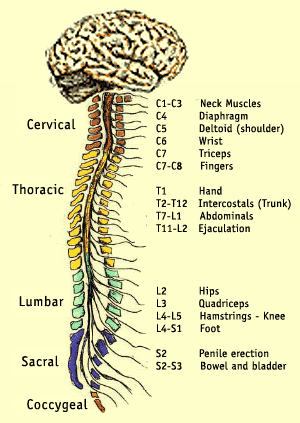 I wasn't too worried about my computer giving out on me right at the start of the new year, other than the wince that comes along with having bad luck the first week (you know that myth saying your first few days of 2008 reflect how your year will go? Let's really hope myth is the key word there...), since typically not much happens in the news. So if I have to be offline, it's a good time to be offline.
So naturally, science and the news goes and proves me wrong. The first time I sit down with the computer and pull up the news, literally the first thing I see is amazing:
For the first time, a UCLA study shows that the central nervous system can reorganize itself and follow new pathways to restore the cellular communication required for movement. The discovery could lead to new therapies for the estimated 250,000 Americans who suffer from traumatic spinal cord injuries...It's just a first step; from here, scientists have to actually figure out how to convince nerves to grow around the injured site. So no, tomorrow morning, people with spinal damage won't be able to get up and walk - but, to borrow language from my software days, the proof of concept is there.
"Imagine the long nerve fibers that run between the cells in the brain and lower spinal cord as major freeways," explained Dr. Michael Sofroniew, lead author and professor of neurobiology at the David Geffen School of Medicine at UCLA. "When there's a traffic accident on the freeway, what do drivers do? They take shorter surface streets. These detours aren't as fast or direct, but still allow drivers to reach their destination.
"We saw something similar in our research," he added. "When spinal cord damage blocked direct signals from the brain, under certain conditions the messages were able to make detours around the injury."
I haven't read the Nature article yet, but I also have to wonder what sort of application this might have for other nervous system injuries (especially people who suffer from chronic pain due to problems with their nervous systems).
-Kelly
Sunday, January 06, 2008
Amnesty for War Crimes -- even Healthcare Worker War Crimes?
Timothy Murphy of UIC graciously agreed to kick off the discussion in the new year with a provocative post:
Physicist Freeman Dyson has an interesting essay in the current New York Review of Books. In discussing a biography of Wernher von Braun, Dyson says pretty plainly that he considers his own work for the Royal Air Force as collaboration with the people who planned the destruction of Dresden in early 1945. He has called that bombing “a notorious calamity in which many thousands of innocent civilians were burned to death. If we had lost the war, those responsible might have been condemned as war criminals, and I might have been found guilty of collaborating with them.”
Dyson goes on to say: “War is an inherently immoral activity. Even the best of wars involves crimes and atrocities, and every citizen who takes part in war is to some extent collaborating with criminals.” And yet Dyson does not widen the scope of responsibility because he wants to make it possible to bring more ‘collaborators’ to trial. On the contrary, he believes that this widened sense of responsibility for war shows the need for amnesty, not prosecution.
“Without reconciliation there can be no real peace,” he goes on to say. “Reconciliation means amnesty. It is allowable to execute the worst war criminals, with or without a legal trial, provided that this is done quickly, while the passions of war are still raging. After the executions
are done, there should be no more hunting for criminals and collaborators. In order to make a lasting peace, we must learn to live with our enemies and forgive their crimes. Amnesty means that we are all equal before the law. Amnesty is not easy and not fair, but it is a moral necessity,
because the alternative is an unending cycle of hatred and revenge.”
I thought this would interesting because of what this suggests about prosecutions and/or amnesty for healthcare workers who commit offenses during hostilities or who otherwise enable armed conflict. I have lots of reactions to the ideas here, but I will share just one: I am skeptical that opening the door to executions without trials seems to me a terrible mistake. There ought to be trials. Let's refer to the Nazi doctors' trial, for example. Not all were convicted. Not all the convicted were hanged. Whatever else they do, trials introduce a measure of proportion. Maybe you think that more should have been convicted and more hanged, but executions without trials seems to me to open the door to more mistakes, more unmeasured vengeance, more indulgence.
Friday, January 04, 2008
Having Cake is Different From Eating Cake
The National Academy of Sciences has just released a new book, Science, Evolution, and Creationism, to explain the differences between religion and science, and to clarify the currently muddled discussion on matters entangled in the current conflict.
NYT reports:
In the past year, there has been a significant push-back by prominent atheists and skeptics against dogma-based attacks on science, but this new publication will be key in defusing the artificially constructed conflict between two completely different human endeavors. Hopefully, this year will mark the emergence of a new movement to continue this effort.
NYT reports:
...it is intended specifically for the lay public and because it devotes much of its space to explaining the differences between science and religion, and asserting that acceptance of evolution does not require abandoning belief in God.
...The 70-page book, “Science, Evolution and Creationism,” says, among other things, that “attempts to pit science and religion against each other create controversy where none needs to exist.” And it offers statements from several eminent biologists and members of the clergy to support the view.
In the past year, there has been a significant push-back by prominent atheists and skeptics against dogma-based attacks on science, but this new publication will be key in defusing the artificially constructed conflict between two completely different human endeavors. Hopefully, this year will mark the emergence of a new movement to continue this effort.
A Modern Day "Handmaid's Tale"?
In the latest and, in my opinion, grotesque twist on medical tourism, Judith Warner, author of “"Perfect Madness: Motherhood in the Age of Anxiety" and host of "The Judith Warner Show" on XM Satellite Radio, writes about the commercialization of surrogate motherhood in India. Her report can be found on the New York Times “Domestic Disturbances” blog, located here.
Many of us have talked, debated and written on the topic of surrogate motherhood, but all too often in the academic abstract. For someone like myself, who has thought about surrogacy in terms of commodification and exploitation, it is interesting to read Ms. Warner take on the issue, especially when she states “Our rules of decency seem to differ when the women in question are living in abject poverty, half a world away. Then, selling one’s body for money is not degrading but empowering.”
Many of us have talked, debated and written on the topic of surrogate motherhood, but all too often in the academic abstract. For someone like myself, who has thought about surrogacy in terms of commodification and exploitation, it is interesting to read Ms. Warner take on the issue, especially when she states “Our rules of decency seem to differ when the women in question are living in abject poverty, half a world away. Then, selling one’s body for money is not degrading but empowering.”
Thursday, January 03, 2008
Generations Ahead
From our colleagues at the Center for Genetics and Society:
With great pleasure we announce the growth of the Gender, Justice and Human Genetics program of the Center for Genetics and Society into a new, independent organization, Generations Ahead. The myriad uses of human reproductive and genetic technologies raise important ethical questions for social justice advocates. As we articulate shared values and develop policies to inform how we use these consequential biotechnologies, it is important that we think not only of how we use them today, but also how they will impact generations ahead.Congratulations to Sujatha and her new team from the Women's Bioethics Project. You can read more about the efforts of Generations Ahead here.
Generations Ahead will continue working for reproductive and genetic justice through outreach, capacity-building, cross-movement collaborations, and national coalition-building on assisted reproductive and genetic technologies. Sujatha Jesudason will continue to lead this work in her new role as the Executive Director of Generations Ahead.
Big Pharma and Informed Consent
A colleague asked me to post this entry under the nom de plume J. E. Cochran -- a thought provoking post, I thought:
Informed consent, in a clinical trial, requires that a clinical trial subject be fully informed of all the risks and the benefits of taking part in the trial before participation. The goal of informed consent is that the subjects should have all relevant information, and be able to make their own decisions as to whether they should participate in the clinical trial. This approach is complicated not only because of the complicated information that must be presented to the subject,
which can rarely be fully understood, but also the fact that the information must be kept a secret for business reasons.
The requirement of informed consent, was proposed by physicians, ethicists, and even the US Food and Drug Agency (FDA) and the International Committee on Harmonization (ICH). However, while informed consent does invoke a warm fuzzy feeling and is great PR for
the pharmaceutical industry, the practical procedures and implicationsare far from having been completely worked out.
Pharmaceutical companies spend hundreds of thousands of dollars a year protecting their intellectual property by using patents, trade secrets, copyrights, etc. Accordingly, the investigators, subjects, institutions and all other related personnel who would have access to
the drug or its data are subject to strict confidentiality provisions. Practically speaking, however, it is commonly known that researchers talk amongst themselves and patients routinely discuss their treatment protocols with each other. Drug companies hope to curtails this
practice but realize that they have little choice but to "play along." The research industry chooses from only 3-5% of the entire practicing physician population. This population not only does the required research to approve a drug, but consists of key opinion leaders and a
significant portion of the initial prescribing population. In light of the clout of this researcher population, the industry prefers not to antagonize this population by the stringent enforcement of the confidentiality provisions. The practice of stringent enforcement of confidentiality provisions becomes even murkier when we talk about allowing patients to see the Investigator's Brochure (IB).
The IB is a grouping of the significant scientific data, in the original scientific language, which is made available to the investigator so that the investigator knows all the relevant risks
and benefits when enrolling patients. Conversely, the informed consent form is a significantly simplified document that hopes to inform patients, in a language that they can understand, of only the most important risks and benefits. The trade-off, caused by the use of this simplified language, is that a lot of the risks are not completely addressed in the standard informed consent form.
The question therefore arises: Considering the private and proprietary nature of new chemicals entities (NCEs), and the possible lack of complete information in the typical informed consent form, can a potential subject, request to have access to not only the informed consent form (which the subject is usually required to sign or acknowledge), but also the investigator's brochure?
Pro Business and intellectual property (IP) advocates, as advised by their lawyers, err on the side of protection of the data. They believe that the data generated from the drug can save lives, if only given a chance, and provided a profit can be made on the drug. They believe that this profit can only be made if their drug remains unique and the data generated from their studies is not mis characterized. They hence assert that the patient should only have access to the data that is meant for them and provided since that information has been customized for them such that it is easy for them to understand and difficult to mis-characterize. On the other hand, the drug companies believe that the data provided in an IB is difficult for the lay person to understand, and easy to mis characterize. Furthermore, if that data is provided to competitors, it can serve as a source of erosion of profits since the competitors will either mis-characterize
the data or develop me-too products. To avoid all these complications, pro business and intellectual property advocates err on the side of protection of the data.
On the other hand, patient rights advocates believe that despite the confidentiality provisions, the subject must have access to all data. These advocates believe that the understandability of the data is a significant goal, but should not be a barrier to access to this data. They point out that informed consent cannot occur in the absence of complete information. They also assert that the fact that subjects may not understand the data is an inadequate explanation since the
information should be phrased such that it can be easily understood. (IP advocates point to the inherent risks in over warning and the lack of focus present in 40 page informed consent forms.)
Both sides have valid concerns, each of which must be addressed. However, these concerns must not only be addressed in the vacuum of academia but in the bustling streets of commerce with true capitalism testing what the market supports.
For more info on this subject, click here.
Wednesday, January 02, 2008
Saving the World, One Technology At A Time
 In a similar vein to the previous post, I was encouraged to see
7 Technologies that will Save the Earth in 2008:
- Cellulosic Ethanol.
- LEDs
- Electric Cars come back to life.
- MP3s
- The Kindle
- Solar (more specifically Nanosolar)
Cars Running on Water (a misnomer)
For the details and full article, click here.
Botox in Bali
 So, greetings from Bali! You might well wonder what there is to blog about regarding bioethics in Bali, but one of the things that slaps you upside the head as you are coming into the country is number of advertisements for Botox, 'vaginal rejuvenation', cosmetic stem cell procedures, IVF, and other elective procedures -- all advertised as half the price as in the US -- encouraging Indonesia as the spot for medical tourism. In fact, you can watch your procedure done in virtual 3D.
Tuesday, January 01, 2008
Happy New Year: A Celebration of Hope
 A very Happy New Year to all of our readers from all of us here at the Women's Bioethics Blog -- I love ringing in the new year, it always hold so much promise. For what can we hope to make it a healthier, more ethical New Year? A few things come to mind:
- Transparency -- I just learned this phrase I had not heard before: "Sunlight is the best disinfectant" and for just about every profession, from academia to health care to the justice system, the metaphor holds true.
- Accountability -- a corollary to the above concept -- as a fellow blogger over at the Healthcare blog notes: "The main value of transparency is not necessarily to enable easier consumer choice or to give a hospital a competitive edge. It is to provide creative tension within hospitals so that they hold themselves accountable. This accountability is what will drive doctors, nurses, and administrators to seek constant improvements in the quality and safety of patient care."
- A step towards healing our broken health care system in the
-- Tell us, what do you hope for in 2008?
Subscribe to:
Posts (Atom)


